Supporting Smallholder Farmers in Brazil: Building Resilience, Sustainability, and Opportunity
Across Brazil, many smallholder farmers work hard to sustain their families, often operating on narrow margins and under challenging conditions. Climate shocks such as droughts, floods, and irregular rainfall undermine production stability, while weak bargaining power and dependence on intermediaries constrain incomes. For family farms located close to urban centers, these challenges are compounded by land insecurity, environmental degradation, and insufficient infrastructure.
In this context, the Louis Dreyfus Foundation (LDF) supports a portfolio of projects in Brazil that combine agro ecological practices, professionalization of family farms, market access, and socio environmental compliance. Supported by the commitment and dedication of LDC volunteers, these initiatives aim to strengthen resilience, improve livelihoods, and ensure that sustainable agriculture delivers tangible benefits for smallholder communities.
Valuing the Cerrado: Strengthening Native Species Value Chains
In Brazil’s Cerrado region, LDF works with VBio and CEDAC through the Sustainable Cerrado project, supporting smallholders who cultivate native species alongside food crops. The project currently engages 436 farmers, organized in 39 community centers, with strong participation from women.
The project places a strong emphasis on long term resilience, supporting farmers to improve soil health, diversify production, and access markets that value sustainably produced native crops. Many participating farms are small (averaging around 13 hectares) and rely on a mix of grains, fruits, vegetables, and indigenous species to manage risk and increase family income.
Progress on the ground
Farmers are gradually strengthening their market position. Over 300 producers are now selling through the Solidarity Platform, improving income stability and reducing dependence on intermediaries. At the same time, organic certification processes are advancing, with 67 farms already certified or in transition, reinforcing both environmental stewardship and product value.
Early results indicate that sustainable practices are translating into tangible gains. Participating farmers are reporting yield increases across both food crops and native species, with some crops seeing average improvements of up to 20%. At the same time, income levels have risen significantly, particularly for high value Cerrado products such as baru and faveira, which are generating 40–50% higher revenues for producers compared to pre project levels.
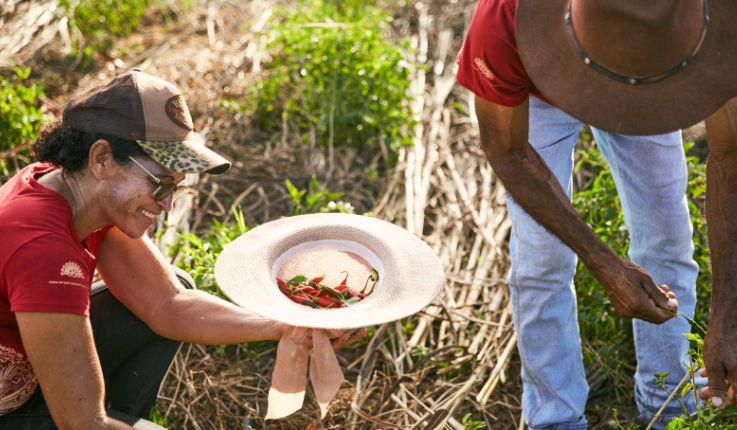
“Our income has increased because of the added value of certified products, allowing us to access new markets while making our production more diversified and better organized. Planning has improved, and our overall quality of life has also benefited. In addition, structured commercialization has made it easier to bring our production to market, ensuring fair pricing and greater security in selling products from family farming, particularly certified ones. This has provided greater financial stability and a better quality of life.”
Maria Adenilde de Andrade, farmer from Urucuia, Minas Gerais State, Brazil.
What lies ahead
The next project year will deepen this progress by expanding organic certification, introducing water‑security solutions, and reinforcing peer learning through technical workshops and exchanges. The focus is on consolidating gains and ensuring that environmental sustainability goes hand in hand with economic viability for smallholders.
Supporting Small‑Scale Soybean Producers through Compliance and Good Practices
Soybean production is central to Brazil’s agricultural economy, yet small‑scale producers often struggle to meet rising socio‑environmental standards and to access affordable finance. In partnership with Abiove and local cooperatives in Rio Grande do Sul, LDF supports 120 smallholder soybean producers through a program focused on Good Agricultural Practices (GAP), compliance, and risk reduction.
Progress on the ground
Since activities began in mid‑2025, the project has focused on farm diagnostics and tailored action plans, helping producers identify gaps in infrastructure, documentation, and environmental management. Soil analyses and follow‑up visits are guiding practical improvements in agronomic practices and input use.
Training delivered to local cooperatives’ technical teams has strengthened knowledge on responsible agrochemical use, integrated pest management, and worker safety—critical elements for both compliance and farm resilience.
The project – that is part of Agro Plus program - is recognized by the Brazilian Government as an official Good Agricultural Practices Promotion Program. This recognition enables participating farmers to access preferential credit conditions under Brazil’s national rural financing scheme, directly linking better practices to improved financial inclusion.
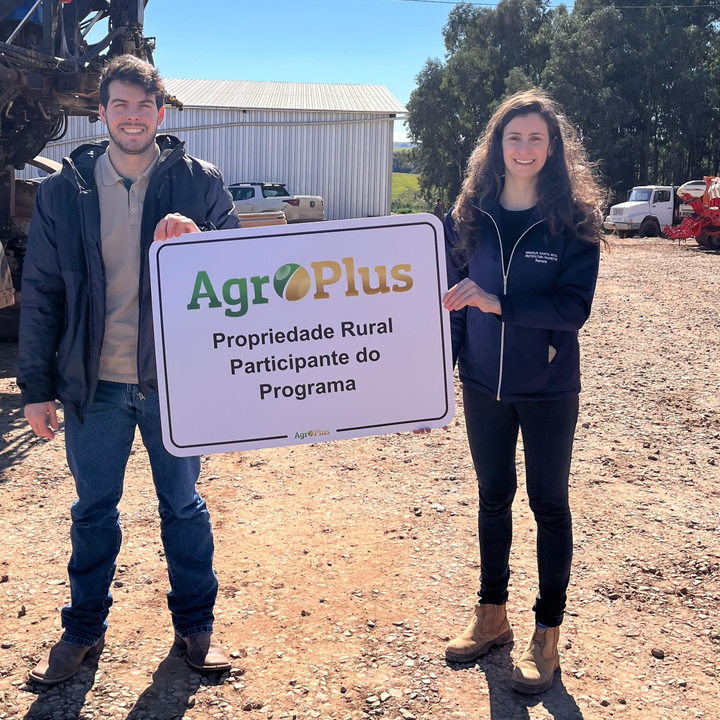
“Thanks to the project, we are taking better care of our soil and are better prepared for difficult weather like droughts or heavy rains. With the advice and support we receive, we can make better decisions on how to fertilize and manage our crops.
We are also learning new practices, like using cover crops, which help protect the soil and keep it healthy. At the same time, we have improved how the farm is organized and better understand safety and legal requirements.
Having regular support from the technical team gives us more confidence in our choices. We believe these changes will help us produce better over time and make our farm more stable, improving our daily life.”
Renata Favaretto, farmer from Tunas, Rio Grande do Sul State, Brazil
What lies ahead
Ongoing technical visits and training will continue to support farmers toward higher compliance levels and broader adoption of regenerative principles, with medium‑term goals focused on improved productivity, income stability, and environmental performance.
Strengthening Family Farms in São Paulo’s Green Belt
In São Paulo State, LDF partners with Agrisud International to support family farms located in Mogi das Cruzes, in the metropolitan green belt—an area critical for food supply but marked by high social vulnerability, flooding risks, and urban pressure. The project targets 100 family farms over three years, combining agro‑ecological training with market‑oriented solutions.
Progress on the ground
Building on earlier pilot work, the project is scaling up support through:
- Technical and management training, helping farmers improve both production practices and economic decision‑making
- Direct support mechanisms (inputs and small equipment) designed to reduce risk during transitions
- Creation of multi‑stakeholder platforms, bringing together farmers, producer organizations, technical services, and buyers to rebalance value‑chain relationships
This integrated approach recognizes that farm‑level change alone is not sufficient— broader structural constraints must also be addressed to ensure lasting impact.
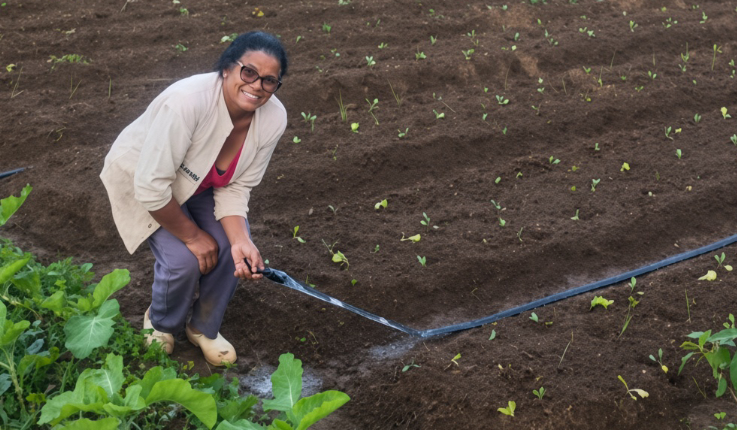
“Before working with Agrisud International’s agricultural technician, I used to spend up to two hours a day watering everything manually. Fernando showed me a few techniques to improve water control and make the irrigation more automated, and now I’ve managed to bring that down to just 30 minutes a day. Also, during the soil training, I realized that adding more fertilizer doesn’t always make the plants healthier or look better. That used to frustrate me, as I was spending quite a lot of money putting more into the soil, but only sometimes seeing results. Now I’m able to manage it much better, achieving better outcomes while spending less.”
Luzia Santos, farmer from Mogi das Cruzes, São Paulo State, Brazil
Expected impact
By the end of the project, participating farms are expected to achieve higher production volumes, improved margins, and stronger market access, with a majority adopting new agroecological practices and management tools. At the same time, the project will establish strong, locally anchored partnerships that will continue to support family farming beyond its duration.
A Shared Perspective on Brazil’s Smallholders
Across Brazil, LDF’s projects are based on a practical understanding that smallholder resilience is shaped by the interaction between farming practices, access to markets, and local organization. Whether in the Cerrado, soybean‑producing regions of Rio Grande do Sul, or peri‑urban areas around São Paulo, the Foundation’s work focuses on targeted technical support, combined with efforts to address some longer‑term constraints, including the conservation of native vegetation.
Through this work, LDF aims to support farmers in improving production practices, responding to market requirements, and strengthening links to markets and finance. Within this approach, smallholders are positioned as active participants in Brazil’s food systems, with a focus on strengthening their capacity to adapt and remain viable over time.
Beyond direct project activities, these initiatives also benefit from the voluntary engagement of Louis Dreyfus Company employees in Brazil, who contribute valuable time, expertise, and local knowledge. Acting as important links between the Foundation and implementing partners, they help facilitate communication and support coordination efforts to strengthen project implementation and foster a shared sense of commitment among all stakeholders. By bridging local realities with corporate engagement, they play a meaningful role in supporting the long-term success and sustainability of LDF’s work in Brazil.